Physical Address
124 City Road, London EC1V 2NX
Physical Address
124 City Road, London EC1V 2NX
If you are learning how to build an email list, you will probably hear the phrase:
lead magnet
At first, it can sound a bit marketing-heavy.
But the idea is actually very simple.
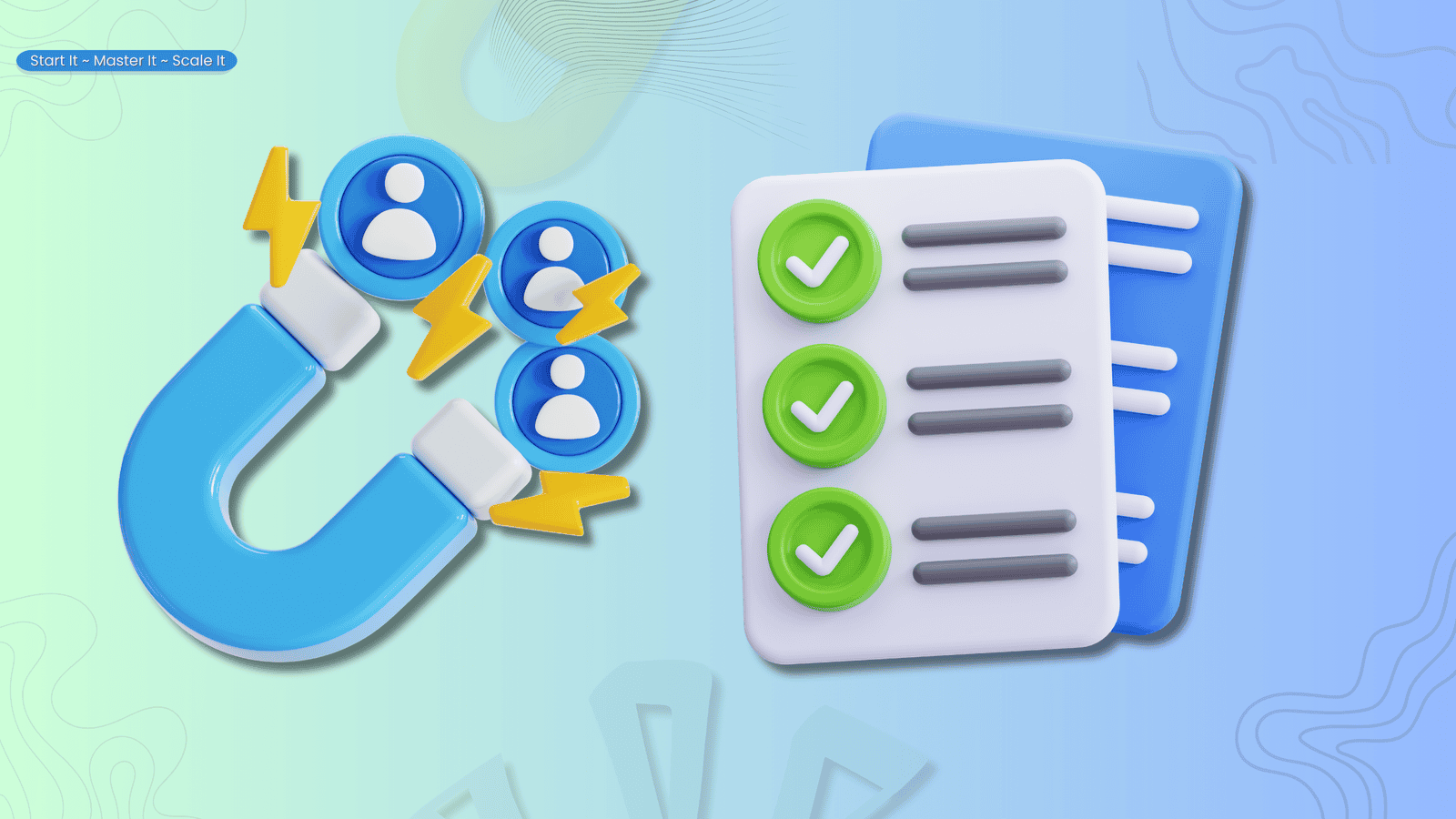
A lead magnet is a free resource you offer in exchange for someone’s email address.
That resource could be a checklist, guide, workbook, template, planner, cheat sheet, mini training, or simple download that helps your reader with one specific problem.
At MMO Essentials, I like to explain it like this:
A lead magnet gives someone a helpful reason to join your email list.
✅ No complicated jargon
✅ No giant free course needed
✅ No 100-page guide required
✅ Just one useful resource that helps with one clear next step
A lead magnet is a free resource that encourages someone to join your email list.
For example:
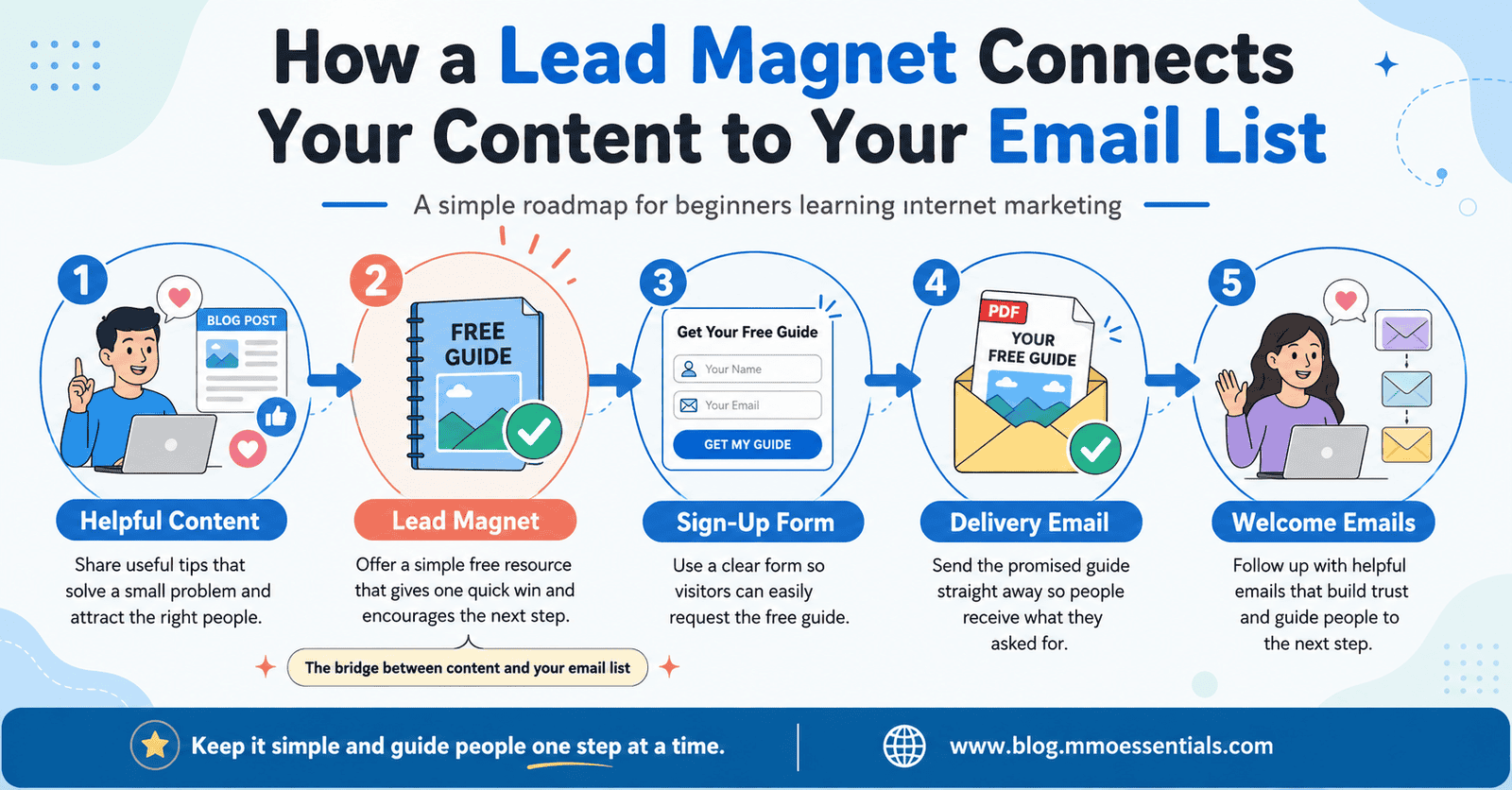
Someone visits your blog.
They read a helpful post.
They see a free guide related to the topic.
They enter their email address.
They receive the guide.
Then they can continue learning from you through email.
That is the simple version.
The lead magnet is not there to impress people with how much you know.
It is there to help them take one useful step.
Most people do not join an email list for no reason.
They need to understand what they are getting and why it will help them.
A good lead magnet gives them that reason.
It creates a small exchange:
They give you permission to email them.
You give them something useful in return.
That is why your lead magnet should feel helpful, clear, and relevant.
It should connect to the content they are already reading.
For example, if someone is reading about email list building, a free email foundation guide makes sense.
If someone is reading about affiliate marketing, a free affiliate marketing foundations workbook makes sense.
The offer should match the moment.
That is what makes it feel natural instead of pushy.
One common beginner mistake is thinking a lead magnet has to be huge.
It does not.
In fact, huge can become a problem.
If your free resource is too broad, people may download it and never use it.
They may feel overwhelmed before they even begin.
A smaller lead magnet is often better because it feels easier to complete.
Examples of simple lead magnets include:
✅ a one-page checklist
✅ a 7-day starter plan
✅ a quick worksheet
✅ a simple template
✅ a beginner glossary
✅ a short planning guide
✅ a step-by-step map
The goal is not to create the biggest freebie.
The goal is to create the most useful next step.
✨ Pro Tip: Specific beats massive. A small guide that solves one clear problem is often more valuable than a huge guide that tries to cover everything.
A good lead magnet is clear, useful, and easy to understand.
It should answer these questions:
✅ Who is this for?
✅ What problem does it help with?
✅ What will the reader be able to do after using it?
✅ Is it simple enough to use quickly?
✅ Does it connect to what I want to help them with next?
A good lead magnet does not need to solve the reader’s entire life.
It just needs to help them move forward.
For example:
Instead of:
The Complete Online Business Bible
Try:
The First Email Foundation Checklist
Instead of:
Everything You Need to Know About Affiliate Marketing
Try:
Affiliate Product Evaluation Worksheet
The second versions are clearer because the reader knows exactly what they are getting.
This is why lead magnets are so useful for bloggers, affiliate marketers, and beginner online business builders.
Your content gets someone’s attention.
Your lead magnet gives them a reason to stay connected.
Your email sequence helps build the relationship.
That is the foundation.
Not complicated.
Just connected.
If you are not sure what to create, start by asking:
What is one small problem my reader wants help with?
Then create a resource that helps with that one thing.
Here are some beginner-friendly ideas:
✅ checklist
✅ mini workbook
✅ starter guide
✅ quick-start plan
✅ planner page
✅ comparison sheet
✅ resource list
✅ mistake checklist
✅ email template
✅ simple swipe file
For MMO Essentials, I use foundation-style workbooks because my audience needs calm, practical guidance without tech overwhelm.
That works well for topics like:
✅ email list building
✅ affiliate marketing
✅ lead magnets
✅ landing pages
✅ simple online systems
Your lead magnet should match your audience, your topic, and the next step you want to help them take.
You can create a lead magnet in many ways.
Some people use Canva, Google Docs, PDF templates, or specialist tools.
For MMO Essentials, I am using LeadCreator for workbook-style lead magnets because it fits the kind of beginner-friendly resources I want to build. I also use Systeme.io for the email side, such as sign-up paths, campaigns, and follow-up emails.
Some links I share may be affiliate links, which means I may earn a commission if you choose to use them. I only mention tools when they genuinely fit the process I am explaining.
The easiest way to start is to avoid making your lead magnet too clever.
Use this simple structure:
✅ Name the problem
✅ Give one clear promise
✅ Break the solution into small steps
✅ Add a checklist or action prompt
✅ Tell them what to do next
For example:
Problem: I do not know where to start with email list building.
Promise: Plan your first simple email foundation.
Steps: Audience, free guide, sign-up form, delivery email, welcome emails.
Action: Complete the planning prompts.
Next step: Start building the first version.
That is enough.
The first version does not need to be perfect.
It needs to be useful.
At MMO Essentials, my approach is:
Start It with one simple lead magnet.
Master It by learning what your audience actually needs.
Scale It only when the foundation is working.
Do not try to create a giant library before you have created one useful resource.
Start with one.
Improve it.
Then build the next.
If you are new here, you can read more about the MMO Essentials approach and why I created this site on my About page.
🚫 Making the topic too broad
A specific free resource is usually stronger than a general one.
🚫 Trying to teach everything
Your lead magnet should help with one next step, not the entire journey.
🚫 Using a vague title
People should understand what they are getting straight away.
🚫 Forgetting the follow-up
The lead magnet starts the relationship. Your welcome emails continue it.
🚫 Creating something your audience does not need
Start with their problem, not your idea.
So, what is a lead magnet?
It is a free resource that gives someone a clear reason to join your email list.
But more importantly, it is the beginning of a relationship.
That is why a lead magnet does not need to be huge or complicated.
It just needs to be clear, helpful, and connected to the next step.
Start small.
Keep it useful.
Improve as you learn.
If you are learning how lead magnets fit into email list building, the next step is understanding the full simple system.
You can read the main guide here:
👉 How to Build an Email List as a Beginner Without Tech Overwhelm
And if you want a workbook to help you plan your first email foundation, download The Email Foundation Starter Guide.
Inside, you will find the simple email foundation map, lead magnet planning prompts, a sign-up path planner, a welcome email planner, and a 7-day starter action plan.





[…] email list, how to build an email list as a beginner covers the wider picture, and what a lead magnet is explains the free resource that usually sits on the […]