Physical Address
124 City Road, London EC1V 2NX
Physical Address
124 City Road, London EC1V 2NX

Most people think get rich quick schemes work on the gullible.
They do not. They work on sensible people, and that is exactly why they keep working.
✅ Quick Answer: Get rich quick schemes are not designed for people who lack sense. They are designed for people who have real financial pressure, limited time, and no easy way to check who is telling the truth. The problem was never intelligence. It was the order the decisions came in.
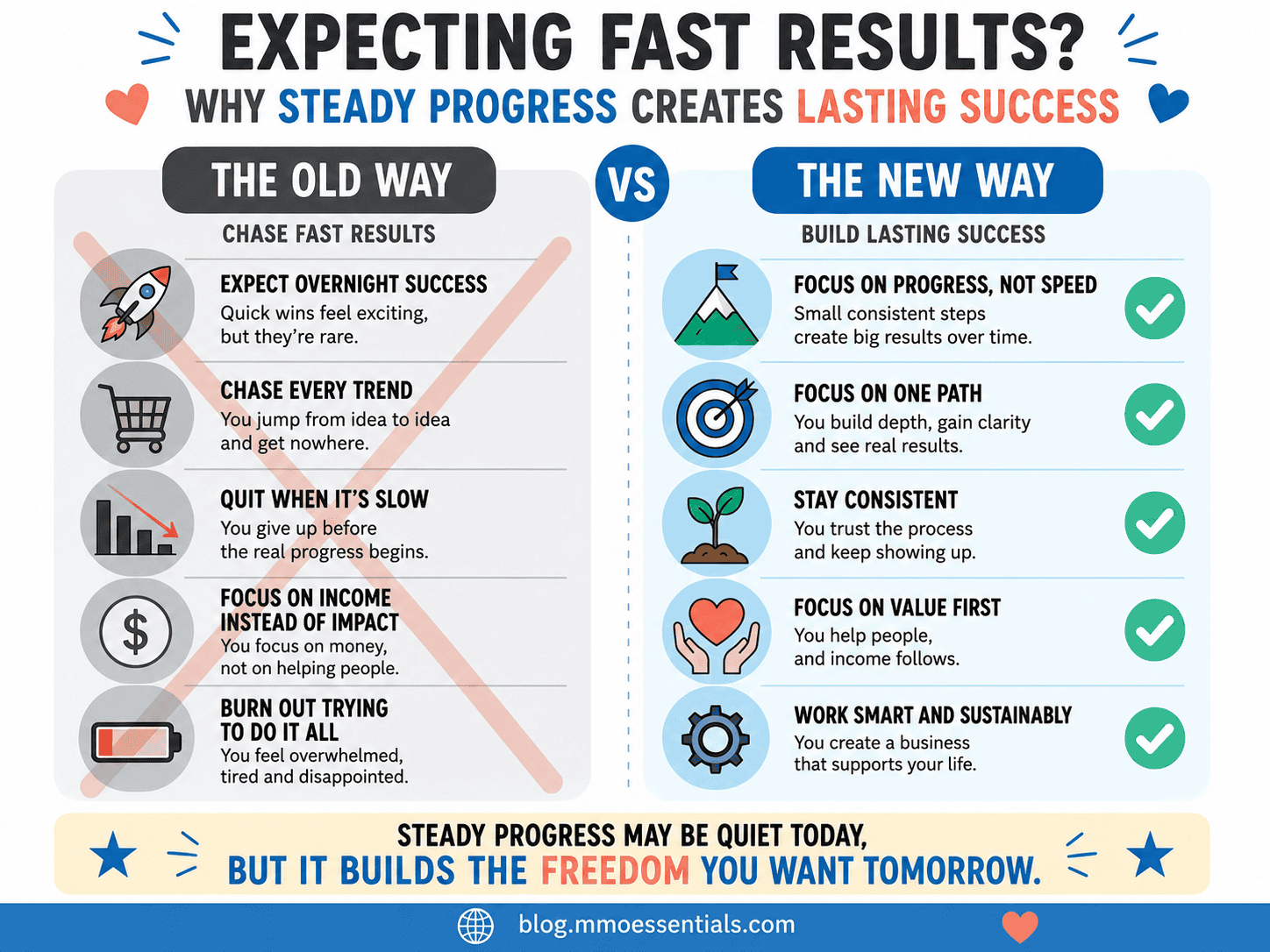
This infographic shows what actually happens between the promise and the reality:
Here is the belief underneath almost every purchase in this space.
Somewhere out there is a system that works faster than the one you are on. You have not found it yet. When you do, the money starts.
It sounds daft written down. It does not feel daft at eleven at night when you are tired, the bills are real, and someone on your screen is showing you a dashboard.
And notice what that belief does. It moves the problem outside you. If the answer is a system you have not found, then nothing that has gone wrong so far was your fault. That is a genuinely comforting thought, and comfort sells.

Here is the part that took me a while to see.
The people selling these offers are not selling affiliate marketing. They are not selling email lists or funnels or traffic. Those are just the wrapper.
They are selling speed. That is the actual product.
Look at how the offers are worded. Daily commissions. Results in thirty days. No experience needed. Notice how little of that describes a skill. It all describes a timeline.
Once you see it, you cannot unsee it, and every sales page in this niche starts to read the same way.
Regulators have landed in the same place, which I found oddly reassuring. The FTC has proposed widening its Business Opportunity Rule to cover money-making offers including business coaching, and the thing it targets is not the product. It is the earnings claim. The promise is the part doing the damage, so the promise is the part being policed.

If you have ever wondered how to get rich quick online, you are not gullible. You are doing something reasonable: looking for a faster route to a real goal.
Three things make sensible people vulnerable here, and none of them are about intelligence.
You cannot check the claim. A screenshot proves nothing. Neither does a testimonial. Without knowing the niche, the spend, or the timeline behind a number, there is no way to judge it from outside.
And it is worse than that now. Faking the proof has become a service you can buy. Reporters at 404 Media gave it a name, LARPing: doctored Stripe, YouTube and Shopify dashboards, staged phone notifications pinging through a video, then the pitch at the end. One journalist built an entire fake online empire himself to show how cheap the props are. The dashboard you’ve looked at may never have belonged to a real business.
So when you feel stupid for having believed a number, remember you were looking at something built to survive exactly the level of scrutiny you were able to give it.
Real pressure shortens patience. Someone who needs money in six weeks cannot afford to hear that this takes eighteen months. So the honest answer gets skipped, and the fast one gets bought.
Nobody teaches the order. Most people are never shown which decision comes first. So every offer looks equally plausible, because there is no framework to measure it against.
That last one is the actual gap. It is not a character flaw. It is a missing map.

You do not need to become more cynical. Cynicism just stops you buying anything, including the useful things.
You need one question instead.
“What will I be able to do at the end of this?”
Ask it about any offer, free or paid. If the answer is a skill or a finished thing you own, that is a real offer. If the answer is an amount of money by a date, that is a promise about speed, and speed is not something anyone can actually sell you.
That one question does more than a scam checklist ever will, because it works on the honest offers too. It tells you which ones are worth your evening.
⚠️ MMO ESSENTIALS REALITY CHECK
I am not writing this from above it. I have bought things that promised speed. I still stay on some of those email lists on purpose, because reading them now is a useful test of whether I can spot the pattern. These days I usually can. That is the only thing that actually changed.
The honest alternative to a fast promise is not a slower promise. It is an order to work in.
That is the whole reason I built the free beginner roadmap. It does not tell you what you will earn, because I do not know and neither does anyone else selling you a number. It walks you through which decision comes first, what has to exist before the next thing makes sense, and what you can safely ignore for now.
The whole thing is free. You get a short preview on the page, then you add your email to carry on reading it. You can download the PDF as well if you would rather work through it offline.
👉 Grab the free MMO Essentials beginner roadmap
Worth reading next:
If you are new here, the About page explains how I work and why there are no income promises anywhere on this site.
Any offer where the main promise is speed rather than skill. If the headline is about how fast the money arrives, and not about what you will be able to do by the end, treat it as one. Price is not the giveaway. Plenty cost under twenty dollars.
No, though it gets sold as one constantly. Affiliate marketing is a real skill built on trust, useful content, and honest recommendations. The scheme is not the model. The scheme is the promise attached to it. There is a fuller answer in Is Affiliate Marketing Legit?
Look at what it promises you will own at the end. A real course promises a skill or a finished asset. A scheme promises an amount of money and a timeframe. Also check whether the sales page tells you who it is not for. Honest offers usually do.
No, and this is the part worth knowing. There is a whole practice of faking them, and reporters have given it a name: LARPing. Sellers show a doctored Stripe, YouTube or Shopify dashboard, add staged phone notifications, then pitch the course. The fake tools cost about as much as a cheap monthly subscription. Treat a screenshot as decoration, never as proof.
Because they are not aimed at foolish people. They are aimed at busy, sensible people who need the money and have limited time to work it out. That is a much larger group, and a much easier one to reach. Go and read a scam forum for ten minutes and you will notice how many posts are somebody worrying about a parent, not a naive teenager.